
Recently, I was able to locate the video of Peter Berg’s memorial in 2011. The event took place in the spacious auditorium of the Randall Museum, on Corona Heights near the tip-top of that rocky outcrop that overlooks the expanse of San Francisco at its feet. This is the very location where many of us had welcomed winter solstices in years past. Peter with his conch shell welcoming the sunrise would always be a memory frozen in time.
There were hundreds of souls who showed up to honor Peter’s memory on October 1, 2011. There were bouquets of herbs, flowers, totems, instruments and offerings on the altar at the front of the stage. Someone had prepared a listing of the dozens who had volunteered to speak. Rob (as he was introduced) was near the last. Here are his words. Ever since hearing Rob talk about what he saw as Peter’s contribution to anarchist theory, I had wanted to find the video and get the transcription entered into the historical record. At last, it is done.
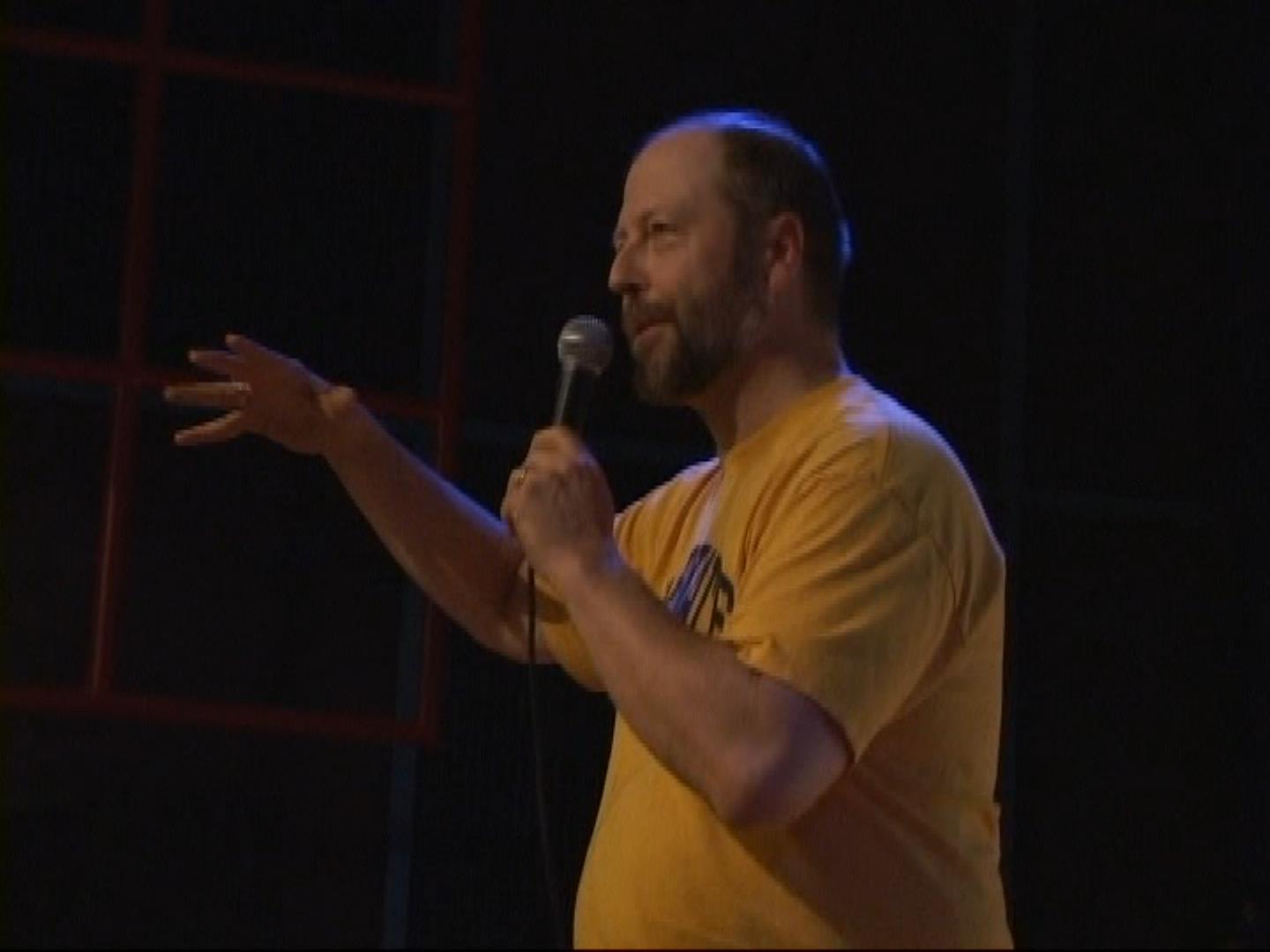
Rob Young’s Eulogy at Peter Berg’s Memorial, October 1, 2011
When you guys were doing your thing in San Francisco there were a bunch of us, 200 million of us, that were elsewhere, living in a faraway country called the United States of America. We were growing up good and proud and watching John Wayne, and when I delivered the newspapers, I used to report the latest American victories on the Vietnam fronts to my clients. And then one summer, I was up in Canada at the family cottage, and in the cottage there was a pile of battered old paperbacks with the front covers torn off. And there was one in the stack. I was about 14 or 15 years old, and it was called Notes from the New Underground. And there were some Digger essays in this thing. So, I read them, and they made so much sense to me that I thought I need to leave the country I’m in right now — not being Canada — United States of America and find these people who have written this stuff and learn more from them about that.
And many years passed and through the inevitable circuitous route by which all of you came to be connected with these people, I, too, followed that circuitous route and came to work at Planet Drum for a while. And while I was there, I was going through the mid-20s, tumultuous, horrific period of life, right? There’s three of those. There’s the terrible twos, and then there’s the terrible 20s, and there’s some other thing I haven’t experienced yet, but later in life that some of you know, and I don’t know. (Voice from the audience says, “menopause.”) Menopause. Thank you. Now I have a word for it, and it was a very difficult time for me at Planet Drum. I was trying to work there and trying to sort some stuff out. And one day, Peter and I were walking down the street together, and as we’re walking down the street, I was thinking about how my dad and I used to walk down the street, we’d hold hands. I was ruminating on this, and suddenly Peter just stops and looks at me like he has that sort of “Owl-Hawk” look thing that he does, you know, and he says, “What?” “You want to hold hands with me, or something?” It’s like holy shit! And so that’s when I knew he was really something special.
So, he was all about location, you know, where are you and what is home, and where are you? And is your head up your ass, or is in the watershed somewhere? And I want to locate Peter for a second, world historically, right? Because a lot of interesting people … as a person said tonight, this is a high character environment for me tonight, looking at all of you. I want to locate Peter in world historic terms. Peter Berg for whatever all the things he was and is, made a very significant contribution to anarchist thought. Anarchist thought up until that point, things like “Anarchist Communism,” by Kropotkin, Bakunin’s theories and Max Sterner’s individualist anarchism, all that stuff. They always talked about the social structures that were necessary for a liberated society, and they elaborate on them in different ways, but they remained modernist theories, because they were social structures that could zip around the planet and sort of be anywhere. You could have this social structure in Bulgaria, you could step over here to England, and it was nowhere. And then Peter Berg came along and answered two important questions in anarchist theory. Where do you locate those social structures? In the bioregion. And secondly, who is the constituency for those social structures? And that’s all species. And Berg made those two contributions. He has radically advanced and matured anarchist thought by those contributions, no doubt heavily influenced by another very important anarchist, Judy Goldhaft. [Audience acclamation.] So, when he said, “What do you want to do, hold hands?” like I wasn’t sure if he wanted to — that’s my personal thing about his magical stuff. But the other thing is his contribution to anarchist doctrine in the world.
And the last thing I want to tell you is, in July of this year, I was walking through some fields, I live in Eugene, and I was walking with my six-year-old daughter and my four-year-old son, and up above us, three military planes were flying, jets, fighters ripping across the sky. And I looked up and I said, they’re flying in the missing man formation. And my son and daughter said, “What do you mean? What’s the missing man formation?” I said, “Well, when somebody who’s very important dies, the United States Air Force will do a flyover in the missing man formation.” And they said, “Where are they going?” And I said, “Looks like they’re going south. They’re headed toward San Francisco” and I didn’t have the word yet, and my six year old daughter said, “Clearly someone very important has just died in San Francisco.” And the next day, I got a call from Judy. So, even the United States Air Force is compelled by the magic of Peter Berg to honor one of their fellow men in arms when he passed away. Peter, you’re so fucking present, I want you to go someplace else for a little while, because you’re filling up the room. Thank you very much for what you’ve done.
[Transcribed by Judy Goldhaft, Eric Noble, with machine assistance, 26 Sept 2024]
Rob died in 2018. Here’s an obituary.
 digger feed: dinosaurs are dancing